

Read by 289 people
quinta-feira, 16 de agosto de 2012
sexta-feira, 11 de maio de 2012
Curators and reperformances
on: http://curatorsintl.org/journal/performance_and_reperformance
Performance and Reperformance
By Mariana Azevedo, Sakina Namazi, Shannon Ryan, Keeli Shaw
on November 1, 2011
Posted in Dispatch

Marina Abramovic, The House with the Ocean View (2002), Sean Kelly Gallery.
As an artistic classification, the term ‘performance art’ is fairly contentious within the contemporary art world. Over the past 40 years, the artistic practice has evolved to encompass myriad forms and titles in an attempt to adequately categorize the genre. Artists, curators and scholars readily agree there are historical sub-movements within the genre, such as body art, live art, etc., but the term ‘performance art’ has been largely accepted as the definitive term and subsequently integrated within both art historical and popular discourse. Some argue the classification of ‘performative’ is misleading and antithetical to the conceptual basis of most works done in the 1960’s and 70’s. The term portends theatricality and therefore misconstrues or alters the intentions of the work because of the association with entertainment.
So it is easy to imagine the contention and debate brought to the forefront of the art world when performance artworks made in the 1960’s and 70’s - when performance art really took off as an artistic practice - was featured within the Solomon R. Guggenheim Museum and Museum of Modern Art in 2005 and 2010, respectively. The Guggenheim’s “Seven Easy Pieces” (2005) featured works by artists such as Joseph Beuys, Gina Pane and Vito Acconci. Intriguingly, these seminal works did not feature the original artist but rather were performed by another, an artistic contemporary who has proclaimed her intentions to take control of the genre: Marina Abramovic. She is responsible for coining the phrase ‘reperformance’ and much debate has occurred over the validity of the term, especially considering the debate regarding the antecedent term ‘performance.’
After MoMA’s “The Artist is Present” (2010), discourse surrounding the classification, considerations and contextual underpinnings of performance art received greater attention and the controversy intensified. The issue, then, becomes whether implications arise when the same artist performs a work outside of its original context, or an artist performs the work of another. Are there acceptable situations or contexts with which the re-performance can be considered?
We believe that Re-performance is a pertinent subject that warrants further discussion; artists, institutions, curators and media are frequently bringing this theme to light, and debating about how to address this issue, especially how to re-create work without wounding the essence of the masterpiece.
Instead of having just one guest addressing the subject-matter, we concluded that it would be interesting to have different voices talking about this. We then decided to publish an open call on the ICI website asking people to submit their essays, articles and ideas around the Re-performance theme. The three submissions included offer diverse and relevant points of view on Re-performance.

Marina Abramovic and Ulay, Imponderabilia (1977).

Marina Abramovic, Imponderabilia Re-performance at Museum of Modern Art (2010).
Hacking Art Reality
Issues towards Hacking Reality Art and Theatre Hacking on
https://apps.facebook.com/theguardian/p/37fbb/tf
Theatre hacking: what's it all about?
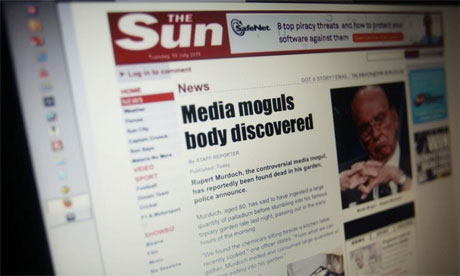 Coming to a theatre near you …? The Sun's website was hacked in July 2011 by hacking collective Lulzsec. Photograph: Yui Mok/PA
Thursday 10 May 2012
An audacious theatremaker has provided audiences with a tongue-in-cheek audio guide to someone else's production. Cue outrage
Forget the antics of Anonymous or LulzSec or even News International. For my money, the most audacious hacking in recent memory took place at a Montreal theatre last November. Local playwright Olivier Choinière held one of his occasional déambulatoires théâtrals – a kind of promenade theatre where the audience is directed around a public space while listening to an audio play on an MP3 player.Instead of roaming the streets of Montreal, however, the audience for Choinière's Projet blanc – as this one-night event was called – found themselves being led to outside the city's classical theatre company, the Théâtre du Nouveau Monde (TNM).
There, Choinière's audience members were furnished with second-balcony tickets to a production of Molière's The School of Wives and given top-secret instructions to hide their headphones and only put them back on once they were in their seats and the lights went down. When this audience hidden within the larger audience at the TNM pressed the right button at the appointed moment, they were treated to Choinière's wry, running commentary on the production they were watching – a monologue that revolved around the question of why we revive classics in the first place, and asked whether the director had really found the contemporary resonances in Molière's comedy that he claimed in the promotional materials.
Choinière – whose best-known play, Bliss, was presented in a translation by Caryl Churchill at London's Royal Court in 2008 – has dubbed what he executed a "hacking". The philosophy behind it: "to enter, to penetrate another cultural event without necessarily bothering or breaking or destroying." Indeed, Choinière's inaugural theatrical hacking flew under the radar at the time, completely unnoticed by the theatre's staff.
Since word got out, however, a debate over the ethics of Choinière's surreptitious infiltration of another artist's work has been raging. Like any high-profile hacker, the 38-year-old playwright provocateur is being held up as a hero by some, a villain by others. Irritated by what she sees as an aggressive act of disrespect, TNM's artistic director Lorraine Pintal has derided Choinière's work as "parasitical". (In private, she used even harsher language – accusing Choinière of perpetrating a kind of theatrical "rape".)
But an article last month in Montreal daily Le Devoir suggested that Choinière was following in the illustrious artist-as-hacker footsteps of Banksy, who famously smuggled a stuffed rat wearing sunglasses into London's Natural History Museum and hung his own artwork in New York's Museum of Modern Art.
Of course, long ago, the theatre had a puckish proto-hacker in another Royal Court playwright, Joe Orton, who with his partner Kenneth Halliwell snuck books out of the library, then returned them with subversively altered dust jackets and blurbs. We can only imagine what Orton's sock puppet Edna Welthorpe would have got up to if s/he had had access to the internet. Personally, I find Choinière's theatrical adaptation of the art of hacking a pretty clever way of making a point – and, ultimately, not any more disruptive to the sacred space of theatre than, say, the current fad for "Tweet seats", reserved seating in which theatregoers are encouraged to post their responses to the play online.
In fact, my mind's been abuzz with ideas for how anarchic artists might secretly spirit audio overlays into all kinds of theatrical productions. And, perhaps, if newspapers do eventually die out, I might find a second career providing commentary tracks to accompany plays – the way US critic Roger Ebert has provided audio commentary for DVD releases of Citizen Kane and Casablanca.
In any case, I eagerly await to see what cultural event Choinière will hack next. And if the TNM remains angry, they should be creative in plotting revenge. As an online commenter on an article about the Canadian controversy recently suggested, why not organise a Molière flash mob to infiltrate one of Choinière's promenade pieces?
quarta-feira, 14 de março de 2012
sábado, 3 de março de 2012
quarta-feira, 8 de fevereiro de 2012
quarta-feira, 25 de janeiro de 2012
segunda-feira, 23 de janeiro de 2012
segunda-feira, 16 de janeiro de 2012
quarta-feira, 2 de novembro de 2011
Allan Kaprow´s Happenings
One time events
"lifelike" art
Aware of ordinary behaviours
Honoring of the ordinary
Re-actment
how much daily life consits of repetitions
quinta-feira, 6 de outubro de 2011
terça-feira, 4 de outubro de 2011
Continuing the serie: Why is risk necessary in art?
Elizabeth Streb: On Taking Big Risks & The Power of Action
Why is risk necessary in art?
To see the complete interview about Elizabeth Streb opinions go to :
http://the99percent.com/articles/7084/Elizabeth-Streb-On-Taking-Big-Risks-The-Power-of-Action
terça-feira, 24 de maio de 2011
Art,Paper,Performance, Fashion, Lots of work, and a genius
Posto o desfile de Jum Nakao que faz parte do documentário " A costura do invisível" que pra mim é um super exemplo de arte, performance, quebra de expectativas, muito trabalho e genialidade. Acima um video contemporâneo de Jum Nakao que nao posso afirmar que se referencia nele, mas eu mesma já realizei esse link, até porque no youtube um está relacioanado ao outro. O segundo video é resutaldo de trabalhos de estudantes de Diseño de Vestuario da UPB sob a orientaçao de Mauricio Velásquez e Claudia Fernández.
"Precisamos desnudar a nossa alma para revelar a capacidade de sermos leves, sonhar com indizíveis, impossíveis, inexplicáveis, indefiníveis. Há um possível ainda invisível no real. " Jum Nakao
sexta-feira, 20 de maio de 2011
With the fashion world's rich and powerful watching your every step the last thing any model would want to do is fall over on the catwalk.
I am really intersted in studying the movement from Models Falls over on the Catwalk . I´ve just can´t find this video on youtube. Thus if you want to see go into the link below.
This video shows some models falls during Naomi Campbell's Fashion for Relief fund-raiser in Cannes.
Enjoy!
http://fashion.telegraph.co.uk/videos/TMG8518038/Fashion-for-Relief-models-tumble-on-catwalk.html
This video shows some models falls during Naomi Campbell's Fashion for Relief fund-raiser in Cannes.
Enjoy!
http://fashion.telegraph.co.uk/videos/TMG8518038/Fashion-for-Relief-models-tumble-on-catwalk.html
domingo, 15 de maio de 2011
segunda-feira, 18 de abril de 2011
The Model- Music For Gisele Studies?
She's a model and she's looking good
I'd like to take her home that's understood
She plays hard to get, she smiles from time to time
It only takes a camera to change her mind
She's going out tonight but drinking just champagne
And she has been checking nearly all the men
She's playing her game and you can hear them say
She is looking good, for beauty we will pay
She's posing for consumer products now and then
For every camera she gives the best she can
I saw her on the cover of a magazine
Now she's a big success, I want to meet her again
I'd like to take her home that's understood
She plays hard to get, she smiles from time to time
It only takes a camera to change her mind
She's going out tonight but drinking just champagne
And she has been checking nearly all the men
She's playing her game and you can hear them say
She is looking good, for beauty we will pay
She's posing for consumer products now and then
For every camera she gives the best she can
I saw her on the cover of a magazine
Now she's a big success, I want to meet her again
segunda-feira, 11 de abril de 2011
Gender Midia Impositions
Nos meus estudos sobre padroes midiáticos de gênero jogar no google Brasil a palavra mulher, dá nisso e somente isso:


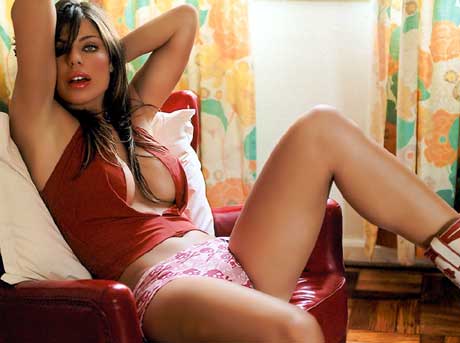


Seguidas de algumas também deterministas de Friedrich Nietzsche em seus devaneios e seu Super Homem.
"O verdadeiro homem quer duas coisas: perigo e jogo. Por isso quer a mulher: o jogo mais perigoso"
"Para a mulher, o homem é um meio: o objetivo é sempre o filho."
"Comparando no seu conjunto homem e mulher pode dizer-se: a mulher não teria engenho para se enfeitar se não tivesse o instinto do papel «secundário» que desempenha."
"As mulheres podem tornar-se facilmente amigas de um homem; mas, para manter essa amizade, torna-se indispensável o concurso de uma pequena antipatia física."
Essas definiçoes, determinaçoes e condutas normativas difundidas pela mídia quanto a mulher estariam caminhando para o pensamento e a elaboraçao de uma "Super Mulher" a qual nada teria a ver com a diversidade, as mudanças adquiridas ao longo do tempo, mas sim com o padrao consumível e consumido?
Fragmentos sobre Queer para estudos de gênero
A teoria queer aprofunda as críticas feministas à ideia de que o gênero é parte essencial do ser individual e as investigações de estudos gays/lésbicos sobre o constructo social relativo à natureza dos actos sexuais e das identidades de gênero ( Wikipédia)
“O gênero é
performativo porque é resultante de um regime que regula as diferenças de gênero.
Neste regime os gêneros se dividem e se hierarquizam de forma coercitiva” (Butler,
2002, p. 64).
"De uma forma resumida e incompleta, podemos dizer que a teoria da
performatividade tenta entender como a repetição das normas, muitas vezes feita de
forma ritualizada, cria sujeitos que são o resultado destas repetições. Assim, quem ousa
se comportar fora destas normas que, quase sempre, encarnam determinados ideais de
masculinidade e feminilidade ligados com uma união heterossexual, acaba sofrendo
sérias conseqüências." (Leandro Colling)
"existem mais questionamentos a esse "set", que se supõe próprio de cada sexo.Queer, como ferramenta teórica, é sinônimo de questionar, de não dar nada por feito, nem sequer a própria teoria queer; ou não crer que existe apenas uma só verdade, ou que a identidade é algo compacto e imóvel.A nível militante, queer é estar aberto a diversidade, a não esperar condutas normativas, a não definir o gênero de uma pessoa em função de suas genitálias, a questionar as hierarquias, o modo que nos apresentam o mundo, a enxergar outras realidades... Cada um faz sua própria leitura. (Carmen Hernández Ojeda)
La Teoría Queer es una hipótesis sobre el género que afirma que la orientación sexual y la identidad sexual o de género de las personas son el resultado de una construcción social y que, por lo tanto, no existen papeles sexuales esenciales o biológicamente inscritos en la naturaleza humana, sino formas socialmente variables de desempeñar uno o varios papeles sexuales.La Teoría Queer critica las clasificaciones sociales tradicionales, basadas habitualmente en el uso de un solo patrón de segmentación —sea la clase social, el sexo, la raza o cualquier otra— y sostiene que las identidades sociales se elaboran de manera más compleja como intersección de múltiples grupos, corrientes y criterios.
Gracias a esa naturaleza efímera, la identidad queer, pese a su insistencia sobre la sexualidad y el género, podría aplicarse a todas las personas que alguna vez se han sentido fuera de lugar ante las restricciones de la heterosexualidad y de los papeles de género. Así, si una mujer se interesa en el deporte o un hombre en las labores domésticas, pueden ser calificados como queers. Por este motivo la mayor parte de los teóricos queer insiste en la autodesignación de la identidad. (Periódico Queer/http://www.queer.org.ar/)
segunda-feira, 7 de março de 2011


Assinar:
Postagens (Atom)